Restoring Cerebrospinal Fluid (CSF) Dynamics via Endoscopic Third Ventriculostomy & Programmable Shunt Implantation
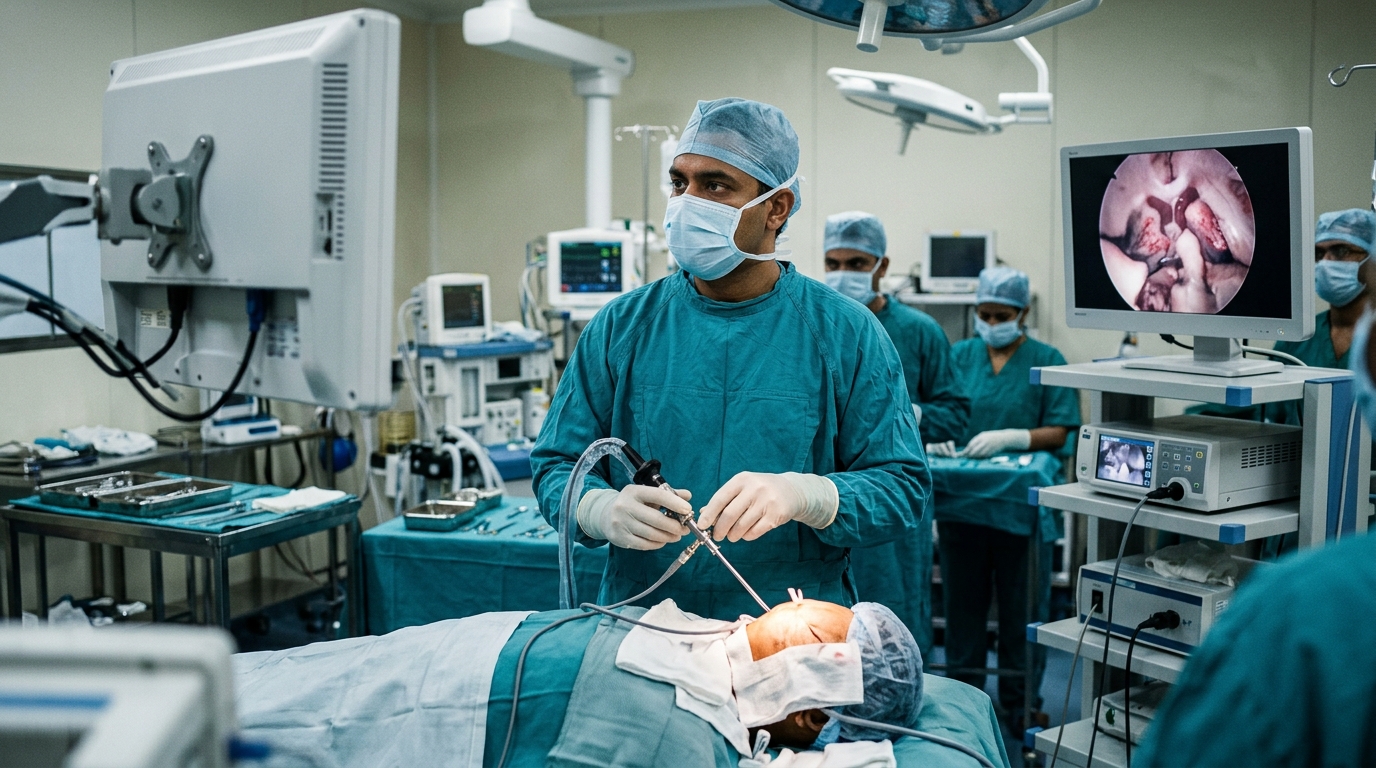
Hydrocephalus Management: VP Shunt & ETV Surgery
Clinical Overview & Pathophysiology
Hydrocephalus is a complex disorder of cerebrospinal fluid (CSF) physiology characterized by an abnormal accumulation of CSF within the cerebral ventricular system, resulting in ventricular dilatation, raised intracranial pressure (ICP), and compressive injury to adjacent brain parenchyma. Hydrocephalus is broadly classified into obstructive (non-communicating) forms, communicating forms, and Normal Pressure Hydrocephalus (NPH), which predominantly affects the elderly population. Dr. Ashok Kumar provides comprehensive clinical evaluation and tailored surgical solutions, utilizing both state-of-the-art Endoscopic Third Ventriculostomy (ETV) and precision Ventriculoperitoneal (VP) Shunting with magnetic programmable anti-siphon valve systems.
Clinical Classifications & Pathological Subtypes
- Obstructive (Non-Communicating) Hydrocephalus: Blockage of CSF flow along the ventricular pathways, most commonly at the Foramen of Monro, Aqueduct of Sylvius, or 4th ventricle exit foramina.
- Communicating Hydrocephalus: Impaired CSF reabsorption across the arachnoid villi into the superior sagittal sinus, frequently secondary to subarachnoid hemorrhage, meningitis, or trauma.
- Normal Pressure Hydrocephalus (NPH): A reversible cause of dementia in older adults characterized by ventriculomegaly with normal or intermittently raised opening CSF pressures.
- Congenital Hydrocephalus: Pediatric developmental ventricular expansion arising from aqueductal stenosis, Dandy-Walker malformations, or neural tube defects.
Key Symptoms & Clinical Presentation
!Emergency Red Flags & Immediate Surgical Indications
Acute deterioration in Glasgow Coma Scale (GCS), bilateral abducens nerve (CN VI) palsies, pupillary dilation, or signs of impending uncal/tonsillar herniation. Acute obstructive hydrocephalus is a surgical emergency requiring immediate ventricular puncture or External Ventricular Drainage (EVD).
Diagnostic & Neuro-Evaluation Workflow
High-Resolution 3T Brain MRI with CISS/FIESTA
Sub-millimeter constructive interference steady-state sequences assessing aqueductal patency, CSF flow voids, and periventricular transependymal transudate.
Non-Contrast Cranial Computed Tomography (NCCT)
Rapid ventricular volume assessment calculating Evans' Index (> 0.30 indicates ventriculomegaly), callosal angle, and temporal horn dilatation.
Diagnostic Lumbar CSF Tap Test (Miller Fisher Test)
Quantitative pre- and post-tap timed gait analysis (10-meter walk test) and neuropsychological scoring following removal of 30-50 ml of CSF to confirm NPH reversibility.
Continuous ICP Monitoring & Infusion Studies
Continuous intracranial pressure wave analysis (recording B-waves and compliance metrics) in challenging communicating hydrocephalus cases.
Advanced Treatments & Procedures by Dr. Ashok Kumar
Endoscopic Third Ventriculostomy (ETV)
A minimally invasive, shunt-free neuro-endoscopic procedure creating a fenestration in the floor of the third ventricle to restore physiological CSF circulation into the prepontine cistern.
Ventriculoperitoneal (VP) Shunt Placement
Precision stereotactic or ultrasound-guided catheter insertion into the right lateral ventricle connected to a subcutaneous peritoneal catheter.
Programmable Anti-Siphon Valve Systems
Implantation of externally adjustable magnetic valves allowing non-invasive transcutaneous pressure optimization in the clinic without surgery.
Ventriculoatrial (VA) & Lumboperitoneal (LP) Shunts
Alternative shunt pathways utilized in patients with extensive abdominal adhesions, prior peritonitis, or selected communicating hydrocephalus variants.
Post-Operative Recovery & Long-Term Prognosis
Hospital stay for elective VP shunt or ETV ranges between 2 to 4 days. Patients with NPH frequently demonstrate dramatic improvement in walking velocity and balance within 24 to 72 hours following CSF drainage. Programmable valves are calibrated post-operatively in the outpatient clinic according to serial CT evaluations and clinical symptom resolution.
Frequently Asked Questions (Clinical FAQs)
Authoritative, medically verified answers to critical clinical questions regarding symptoms, surgical safety, recovery timelines, and long-term prognosis.
What is the main advantage of Endoscopic Third Ventriculostomy (ETV) over a VP Shunt?
Can Normal Pressure Hydrocephalus (NPH) be cured, and is the dementia reversible?
What are the warning signs of VP shunt malfunction or infection?
How does an externally programmable shunt valve work?
Can adults and children with a VP shunt lead normal, active lives?
Brain Surgery & Cranial Conditions
- Brain Tumor Surgery & Neuro-Oncology
- Hydrocephalus Management: VP Shunt & ETV Surgery
- Head Injury & Emergency Neuro-Trauma Care
- Meningitis & Central Nervous System Infections
- Headache & Cranial Neuralgias: Neurosurgical Care
- Dizziness, Vertigo & Posterior Fossa Neuro-Evaluation
- Epilepsy & Seizure Disorders: Neurosurgical Evaluation
Why Choose Dr. Ashok Kumar
Emergency 24 Hours Dr. Ashok Kumar
Neuro-Spine OPD Location
Direct Consultation & Emergency
Email: dr.ashokkumar4108@gmail.com
Consultation Hours
Emergency Neuro-Trauma: 24/7 Open