Emergency Decompression, Pedicle Screw Stabilization & Functional Spinal Cord Preservation
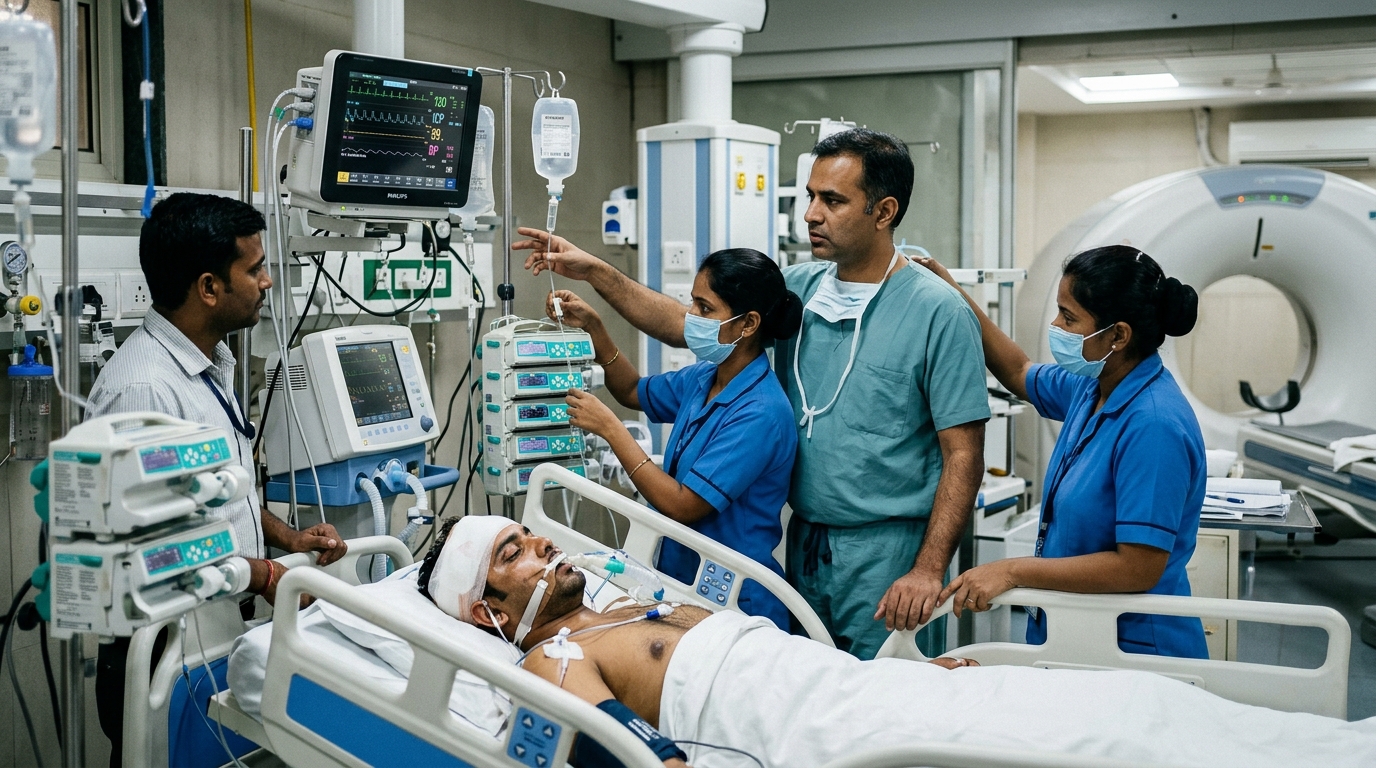
Spine Injury, Spinal Fractures & Trauma Reconstruction
Clinical Overview & Pathophysiology
Spine trauma comprises mechanical fractures, dislocations, and subluxations of the cervical, thoracic, and lumbosacral vertebral column, often accompanied by Spinal Cord Injury (SCI) or cauda equina transection. High-energy mechanisms—such as motor vehicle collisions, falls from height, diving accidents, and industrial injuries—induce flexion-distraction, axial burst compression, or rotational shear forces that breach spinal structural integrity. Spinal cord injury involves primary mechanical trauma (shearing, laceration, contusion) followed by an aggressive cascade of secondary injury (ischemia, microvascular thrombosis, excitotoxicity, and cord edema). Dr. Ashok Kumar provides round-the-clock emergency neuro-trauma management, executing immediate closed or open spinal reduction, anterior/posterior canal decompression, and rigid instrumented fixation within the critical therapeutic “Golden Window”.
Clinical Classifications & Pathological Subtypes
- Cervical Spine Dislocations & Jumped Facets: Severe ligamentous disruption allowing one cervical vertebra to slide anteriorly over another, creating acute spinal cord compression and quadriplegia.
- Odontoid (Dens) Fractures (Type II & III): Fractures across the peg-like odontoid process of C2 (axis), destabilizing the craniovertebral junction.
- Thoracolumbar Burst Fractures: Axial loading catastrophic failure of anterior and middle vertebral columns, driving retropulsed bone fragments into the spinal canal.
- Flexion-Distraction (Chance) Fractures: Horizontal fracture line splitting bone and posterior ligamentous complex, typically associated with lap seatbelt deceleration.
- Complete vs Incomplete Spinal Cord Injury: Classified according to the ASIA (American Spinal Injury Association) Impairment Scale from Grade A (complete motor/sensory loss) to Grade D/E (functional recovery).
Key Symptoms & Clinical Presentation
!Emergency Red Flags & Immediate Surgical Indications
Progressively ascending neurological deficit level, respiratory insufficiency (involvement of C3-C5 phrenic nerve nucleus causing diaphragmatic paralysis), priapism in males, and paradoxical abdominal breathing. Emergency intubation with in-line cervical stabilization and immediate surgical decompression are required.
Diagnostic & Neuro-Evaluation Workflow
Whole-Spine Multi-Detector Trauma CT with 3D Reconstructions
Rapid, definitive imaging identifying fracture planes, canal encroachment percentage, pedicle morphology, and facet subluxation.
Emergency High-Field Spine MRI
Essential for evaluating spinal cord parenchymal hemorrhage, cord edema, epidural hematomas, and disruption of the Posterior Ligamentous Complex (PLC).
Dynamic Fluoroscopy & Closed Cervical Traction
Real-time radiographic monitoring during Gardner-Wells tong traction for urgent closed reduction of bilateral jumped cervical facets.
CT Angiography of Vertebral Arteries
Mandatory screening for vertebral artery dissection in cervical spine facet subluxation and transverse foramen fractures.
Advanced Treatments & Procedures by Dr. Ashok Kumar
Emergency Surgical Canal Decompression
Anterior corpectomy or posterior laminectomy relieving mechanical bony impingement on the ischemic spinal cord within the first 8-24 hours.
Anterior Odontoid Screw Fixation
Preserves normal C1-C2 rotatory motion by inserting a cannulated titanium lag screw across the fractured odontoid peg through an anterior cervical approach.
Anterior Cervical Discectomy / Corpectomy with Plating
Restoration of cervical alignment, cage insertion, and rigid anterior locking plate stabilization.
Posterior Percutaneous / Open Pedicle Screw Fixation
Multi-level segmental stabilization of thoracic and lumbar fractures using titanium pedicle screws and contoured connecting rods.
Intensive Hemodynamic Perfusion Protocol
Maintaining Mean Arterial Pressure (MAP) > 85-90 mmHg for 7 days in the Neuro-ICU using vasopressors to optimize microcirculation to the injured spinal cord.
Post-Operative Recovery & Long-Term Prognosis
Patients are transferred from the Neuro-ICU to our dedicated spinal rehabilitation unit once hemodynamically stable. Intensive physical therapy focuses on bed mobility, wheelchair transfer, robotic gait training, tilt-table standing, neurogenic bladder catheterization regimens, and prevention of pressure ulcers and heterotopic ossification.
Frequently Asked Questions (Clinical FAQs)
Authoritative, medically verified answers to critical clinical questions regarding symptoms, surgical safety, recovery timelines, and long-term prognosis.
Why is the "Golden Window" (first 8 to 24 hours) critical in acute spinal cord injury?
Can a paralyzed patient walk again after a fractured spine and spinal cord injury?
What is the role of pedicle screw fixation in spine fractures?
How are neck dislocations and jumped facets reduced safely?
What is Neurogenic Shock and how is it managed during spine trauma resuscitation?
Spine Surgery & Spinal Disorders
Why Choose Dr. Ashok Kumar
Emergency 24 Hours Dr. Ashok Kumar
Neuro-Spine OPD Location
Direct Consultation & Emergency
Email: dr.ashokkumar4108@gmail.com
Consultation Hours
Emergency Neuro-Trauma: 24/7 Open